
RoomRunner
Every unfilled seat is lost revenue. RoomRunner tells childcare directors exactly who to move, when, and why, so no seat sits empty.

COMPANY:
Procare Solutions
TEAM:
Designer, PM, Dev Lead
My Role:
Product Designer, leading design from beta through GA
TIMELINE:
4 months
status:
Shipped
Problem
Childcare directors were managing enrollment with spreadsheets, sticky notes, and memory. Every room transition, every waitlist check, every parent question was answered with guesswork.
When a parent called asking "when would you have an opening?" a director had to put them on hold, open a spreadsheet, cross-reference enrollment counts, age ranges, and licensing ratios, then give a vague estimate. No confirmation, no record, no guarantee it was accurate.
The cost wasn't just inefficiency. An unfilled seat generates $0. And the longer it stays empty, the more that compounds.
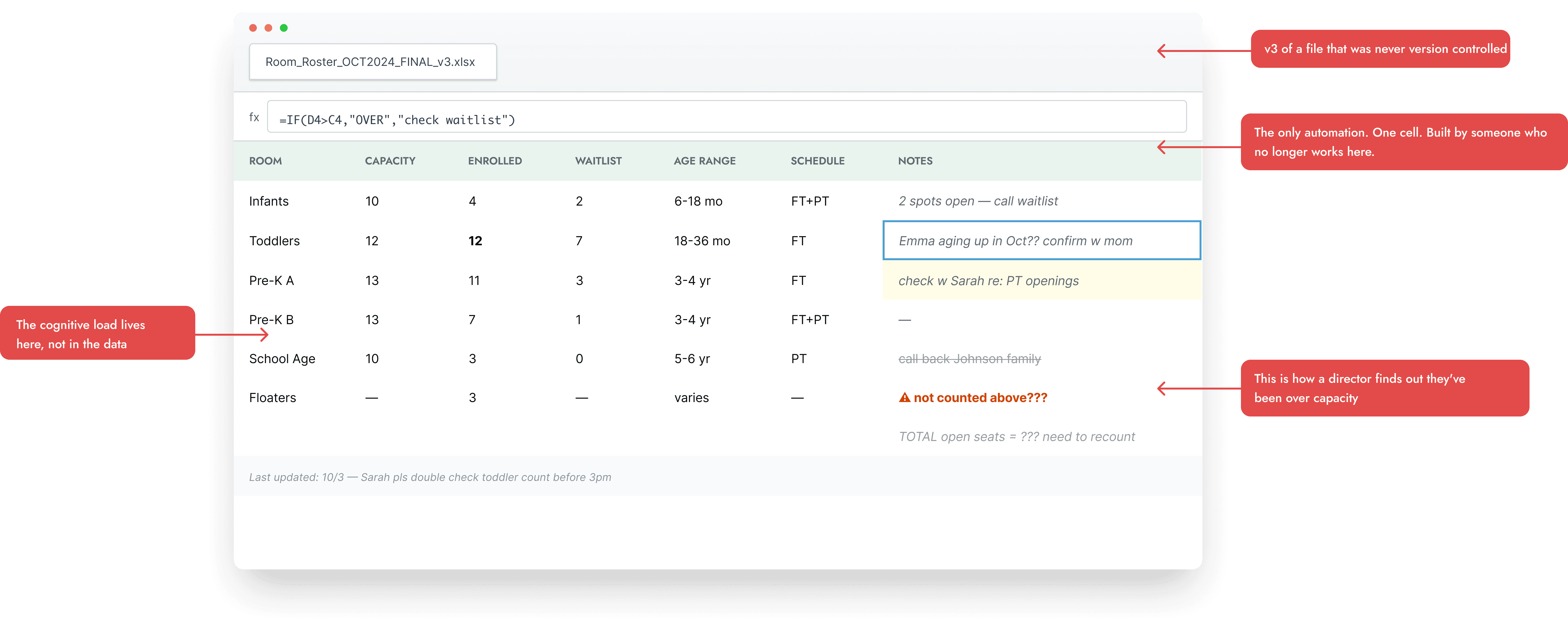
Three methods. One clear finding.
(01)
Support Ticket Analysis:
Reviewed three months of waitlist-related support requests to identify where the process was breaking down at scale.
(02)
Process Shadowing
Watched directors manage transitions in real time. Spreadsheets, notes on paper, mental math.
(03)
Interviews and Surveys
Directors ranked capacity uncertainty and seat waste as a top-2 pain points across all operational challenges.
They want confidence that every seat that can be filled will be filled, without breaking licensing rules or their sanity.
The Stats
1 in 3
childcare centers struggle with registration and enrollment
$0
revenue from an unfilled seat, the cost of doing nothing compounds monthly
Top 2
pain points ranked by directors surveyed: capacity uncertainty
How we got to a solution
Option A
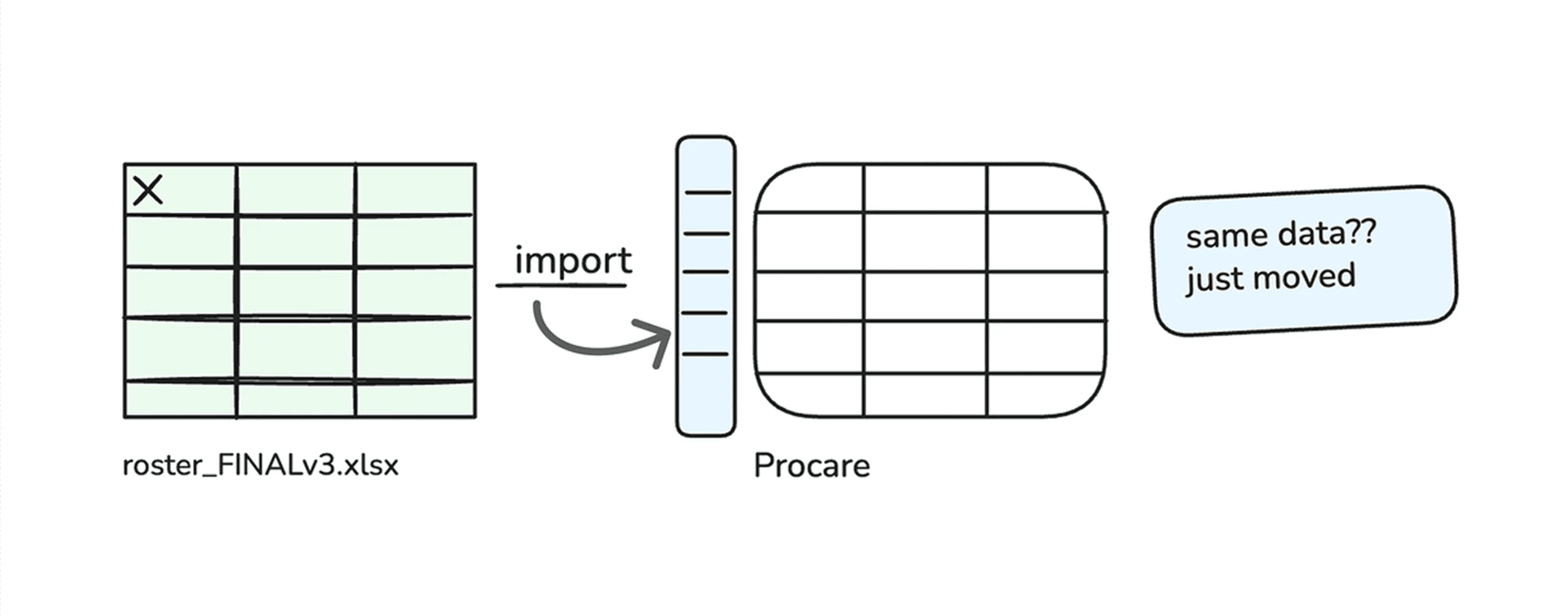
Directors upload their existing Excel roster into Procare. The system maps the columns, pulls in the data, and displays it inside the tool. Same spreadsheet logic, just living inside the product now.
We didn't choose this because the data moves but the problem doesn't. Directors are still maintaining a spreadsheet, they've just changed where it lives. Every update still requires manual entry. The cognitive load follows the file.

The Solution
The dashboard: a planning tool, not a report
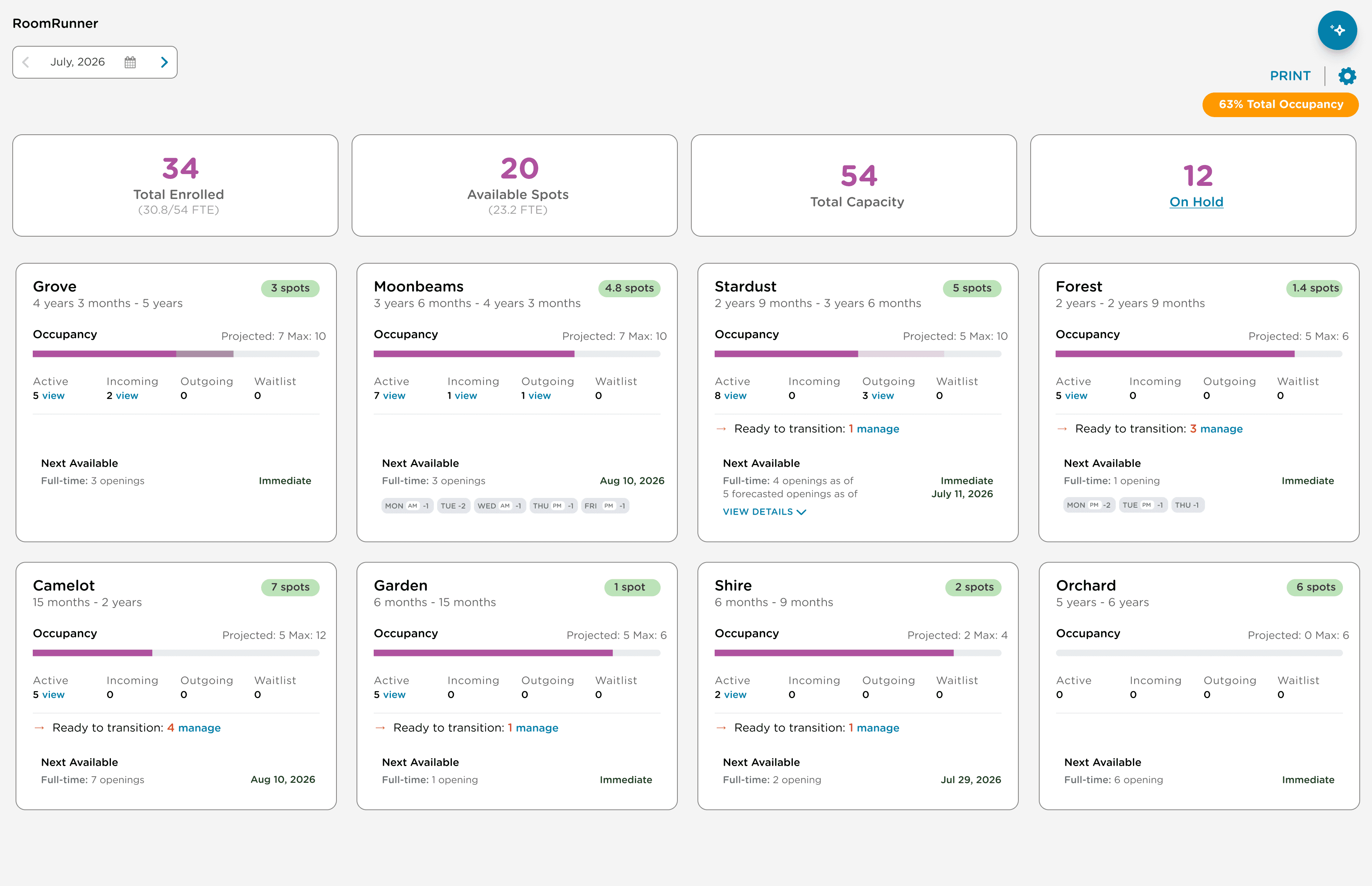
Every room shows occupancy, active/incoming/outgoing counts, and next availability at a glance, so a director can answer a parent's question without opening anything else. The dashboard counts seat utilization, not headcount: a part-time child is 0.6 of a seat, not 1. It shows both the whole number and FTE because directors think in kids, but licensing thinks in ratios.
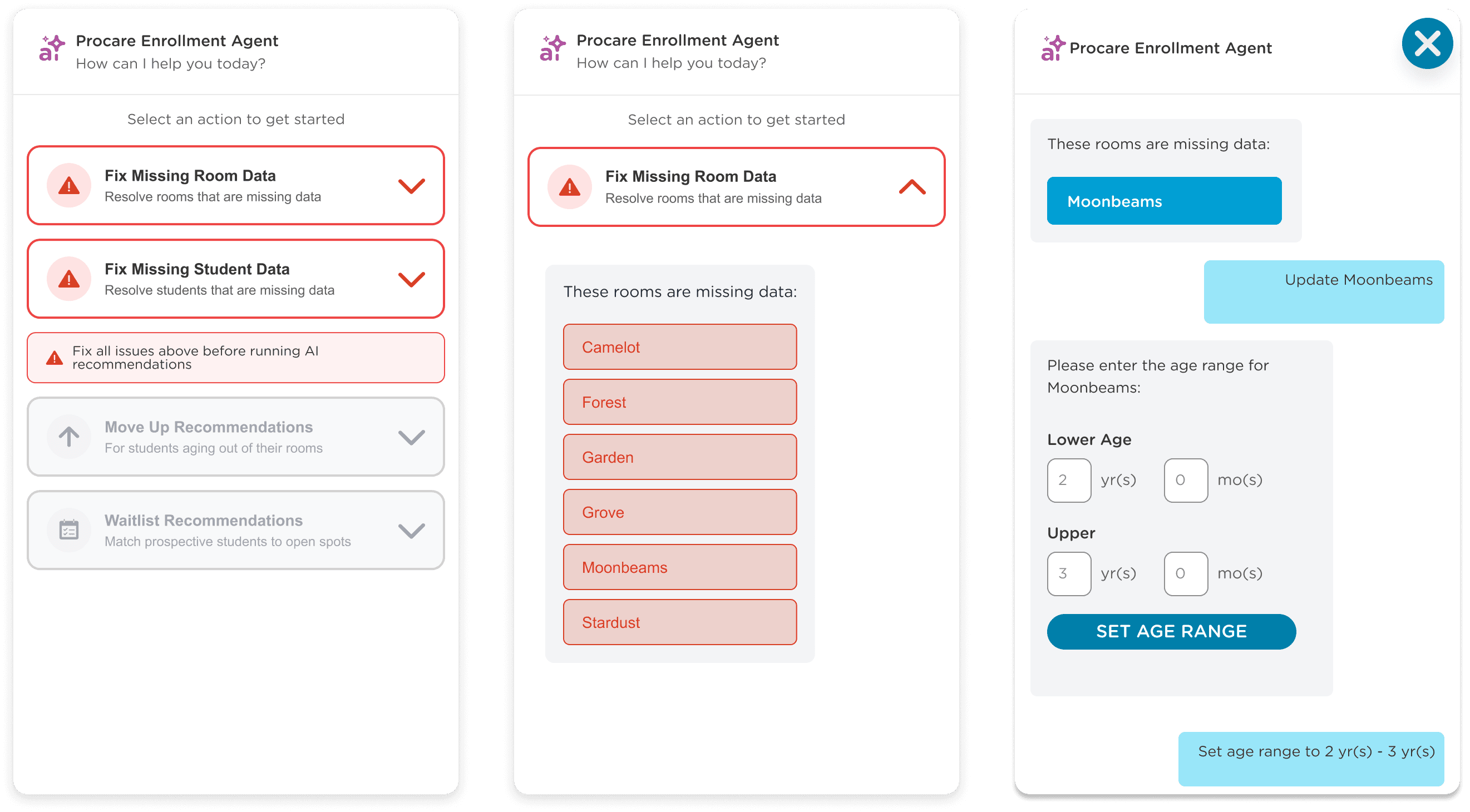
Designing for the messy case, not just the happy path
Real rosters are incomplete. Rooms are missing age ranges or capacity numbers, and students are missing dates of birth.
Rather than let the tool silently break or show wrong numbers, RoomRunner surfaces exactly what's missing and lets the director fix it inline through the same assistant, one room or one student at a time.
The AI shows its reasoning before anyone commits to anything
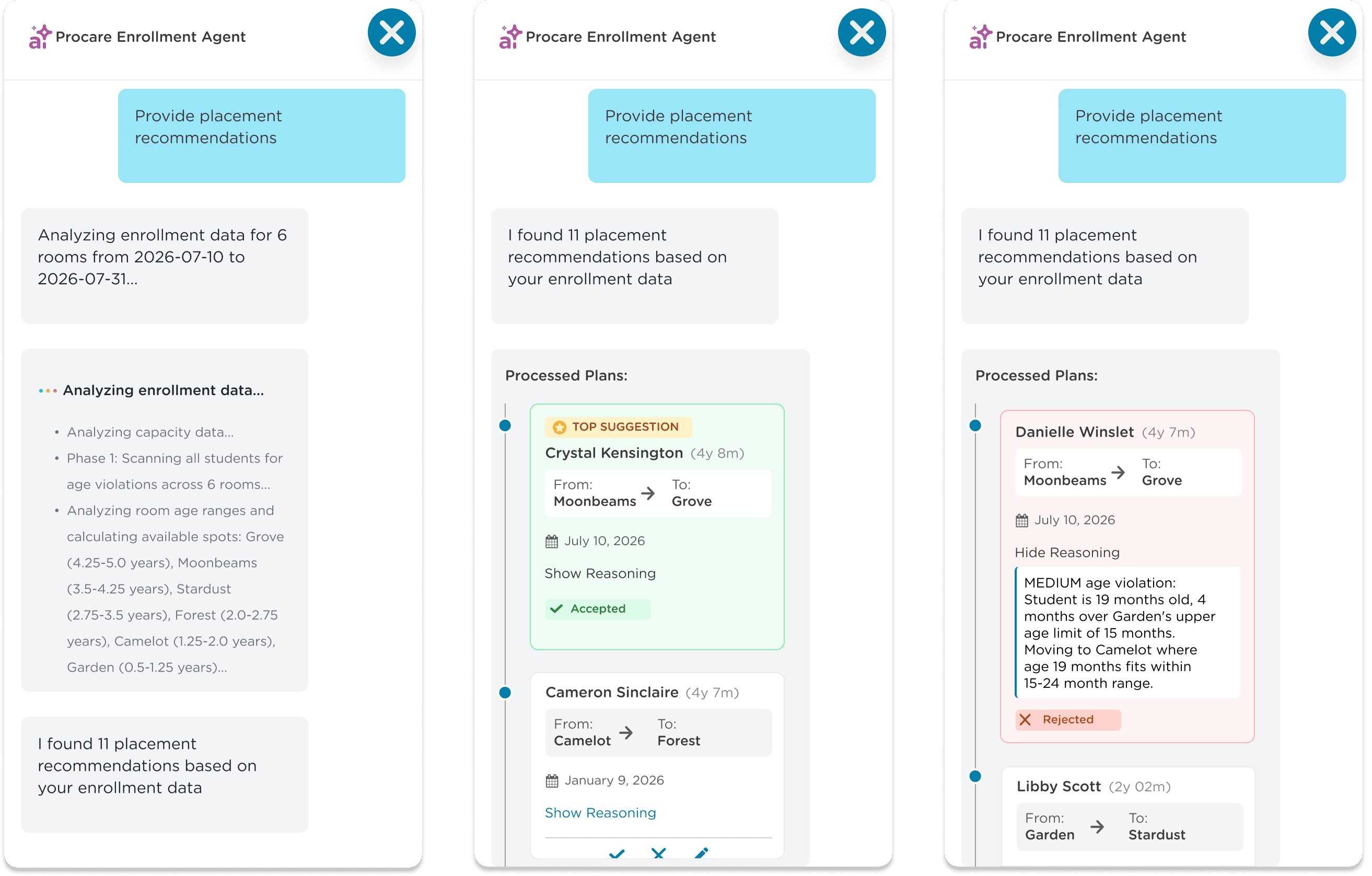
This is the direct answer to "why show AI reasoning at all": the agent doesn't just output a decision; it narrates its own process, step by step, before presenting a recommendation. A director can approve, reject, or modify each suggestion individually, and every decision is logged. The AI does the constraint-matching across dozens of variables. The human makes the call that's actually theirs to make.
Built for real operational volume
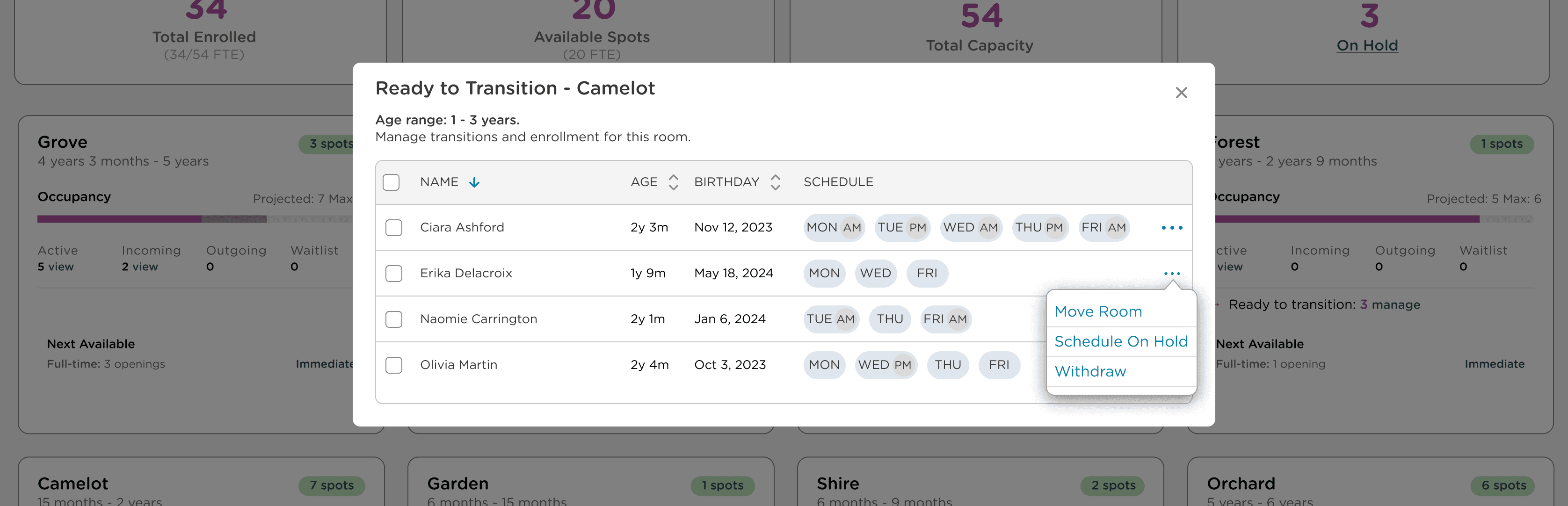
Directors aren't moving one kid at a time. When four kids in a room are all ready to transition on the same day, RoomRunner supports bulk actions instead of forcing four separate manual updates.
Change over time, not just a snapshot
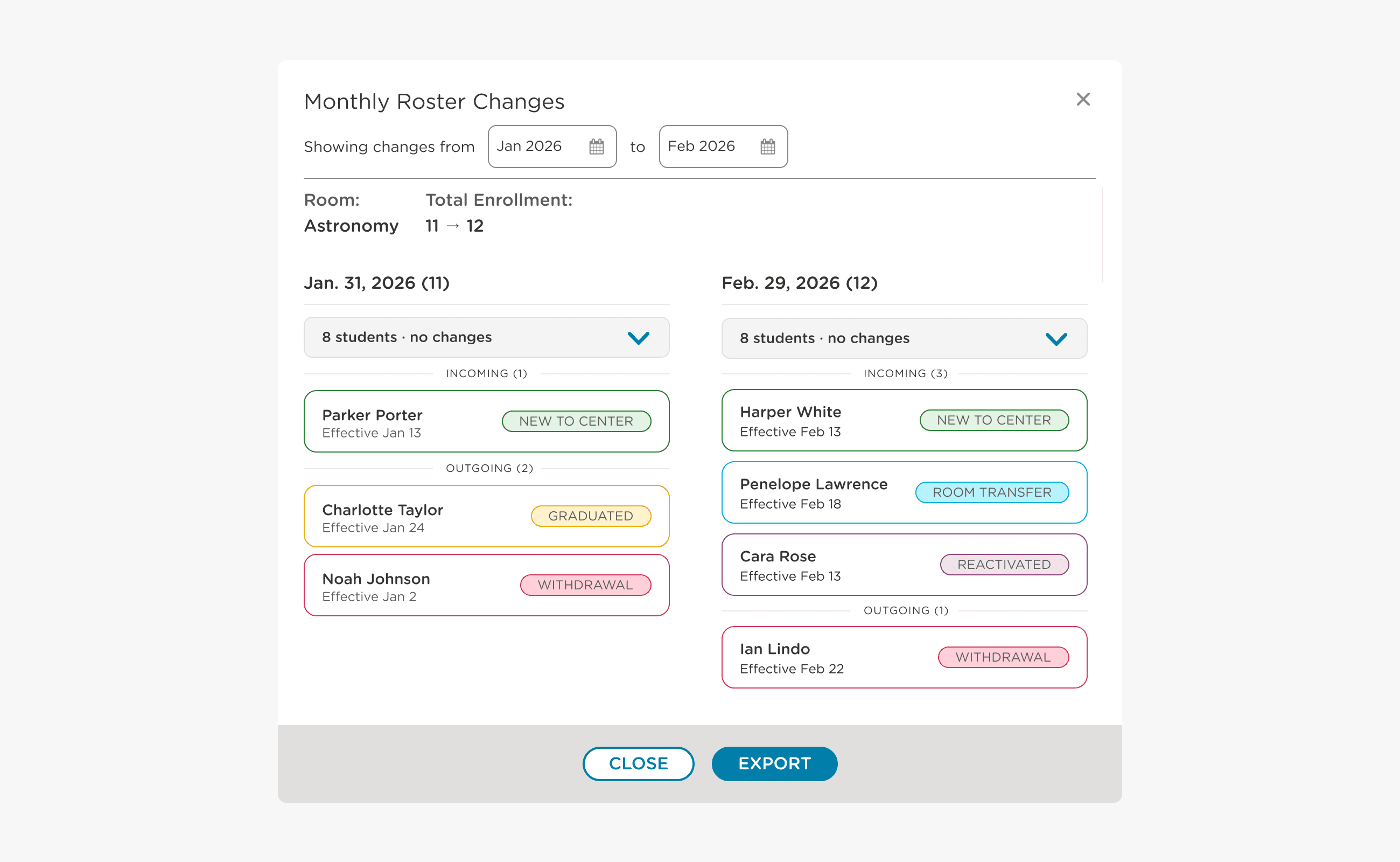
Every roster change is categorized; directors need to know which changes require action and which are just the plan working, and the badge does that triage instantly without reading every line. Students with no changes are collapsed into a single line, so the visual weight goes entirely to what actually moved. Side-by-side comparison also reveals patterns a single month can't.
Results
"You can't put a price on being able to give somebody an answer about whether or not you have space or a waitlist." — Danilynn B., Center Director
"We were going to be over capacity for our infant room. I don't know that we would have caught that in time before." — Erin H., Assistant Director

What's Next
RoomRunner was Procare's first real AI product, not a feature with AI in the name, but an agent making calls a director used to make alone.
Usage split in two. Directors who trusted it created thousands of move plans. Directors who didn't kept asking one question: what is this doing on its own, and what needs me? Seven support tickets in the first three days post-GA asked some version of that.
We designed the confirm step well. We hadn't designed for the moment before it, deciding whether to trust the system at all.
That's the real lesson going forward: customers aren't sold on AI, they're cautiously optimistic