
Procare Payroll
Bringing payroll in-house for childcare centers, and navigating the vendor complexity that came with it.

COMPANY:
Procare Solutions
TEAM:
Designer, PM, Engineering Lead
My Role:
Product Designer
TIMELINE:
10 months
status:
Designed · Shelved
Problem
Payroll was the last major workflow running outside of Procare. Directors were exporting staff hours into QuickBooks or Gusto, manually re-entering data, and reconciling across two or three systems just to run a single pay period. Every cycle was a chance for error. Every error had real consequences for real people's paychecks.
What made this challenging:
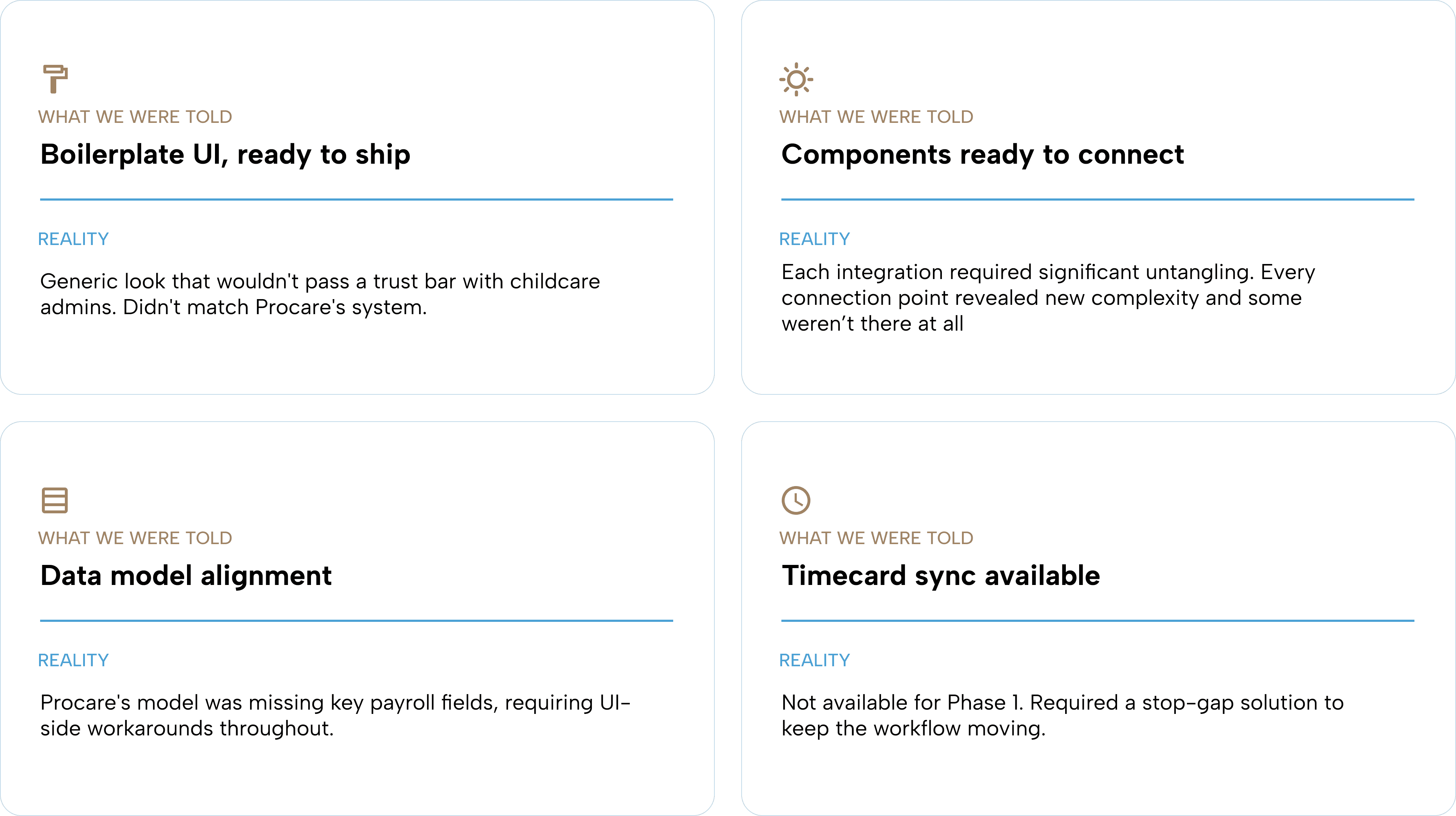
Procare had already signed a contract with CheckHQ before design was involved. We inherited a boilerplate that didn't match our system, terminology, or trust bar.
Payroll sits at the intersection of time tracking, staff management, billing, and compliance. Every connection point revealed new complexity.
We had to build something good enough to compete with Gusto and QuickBooks, or there was no reason for customers to switch.

Constraints and Reality
What we were told vs. what we found
By the time design was involved, Procare had already signed with CheckHQ. Stakeholders wanted to move fast, and CheckHQ offered a boilerplate UI ready to use immediately.
Research
We knew the users and mapped the gaps
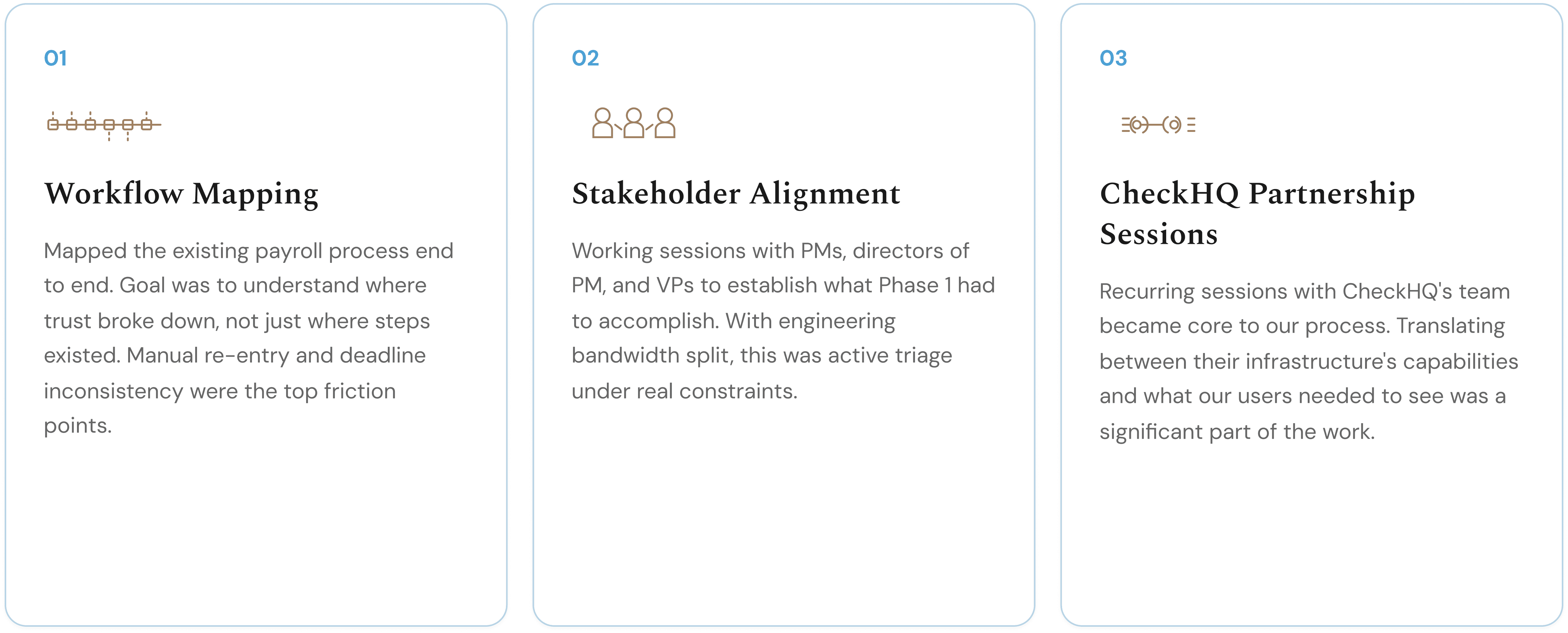
We didn't start from zero. The payroll workflow lived adjacent to features we'd already designed, and we knew the user base well. Research focused on where the existing process broke down and what Phase 1 had to accomplish.
How we got to a solution
The biggest early decision was whether to use CheckHQ's boilerplate.
Would the boilerplate have shipped faster?
No. Its speed advantage only existed at the UI layer. Underneath it, Procare's data model was still missing key payroll fields, timecard sync wasn't ready for Phase 1, and CheckHQ's components needed real engineering work to connect, regardless of whose UI sat on top. That work had to happen either way.

Design decisions
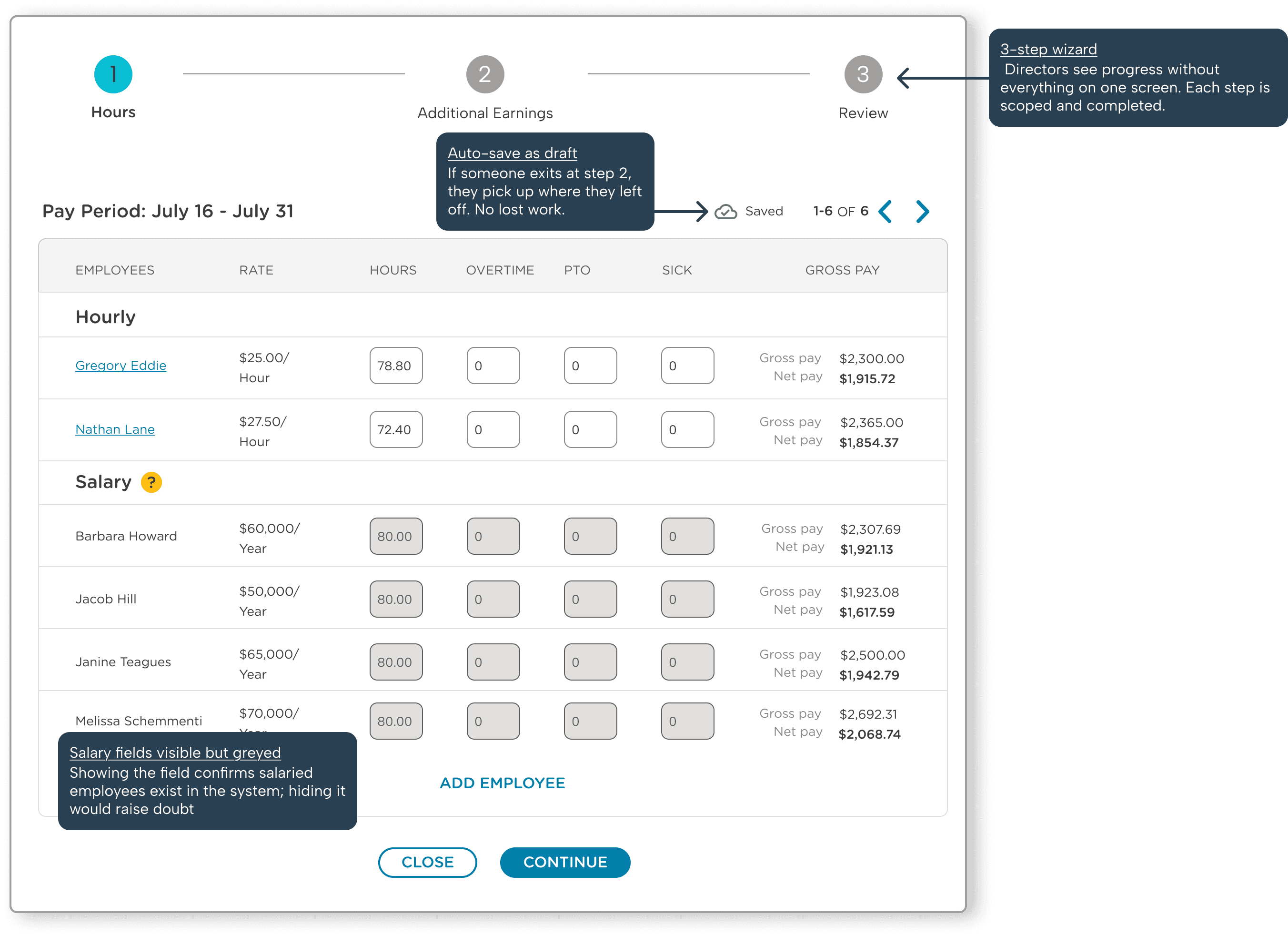
Payroll run flow
Dashboard home
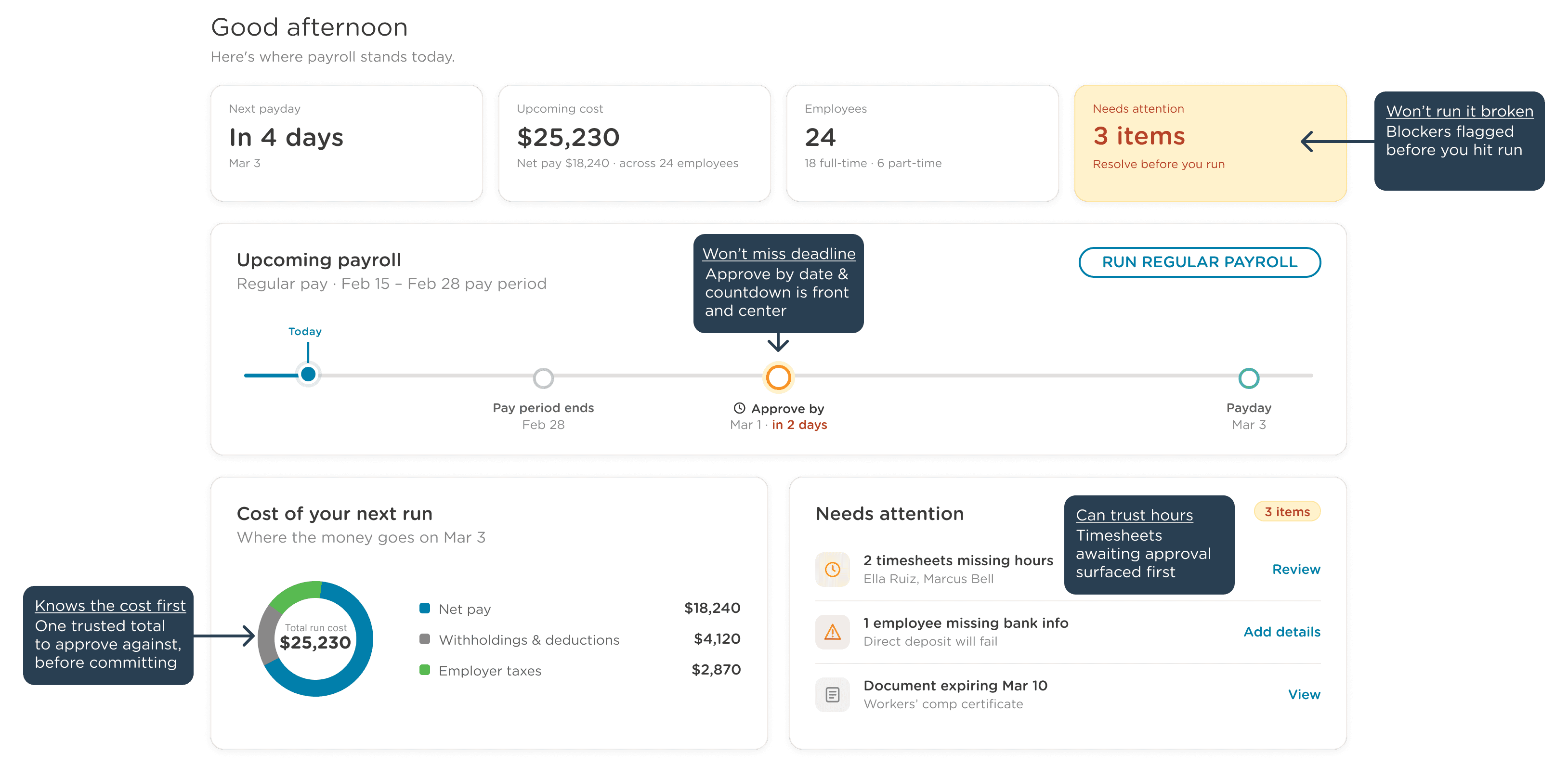
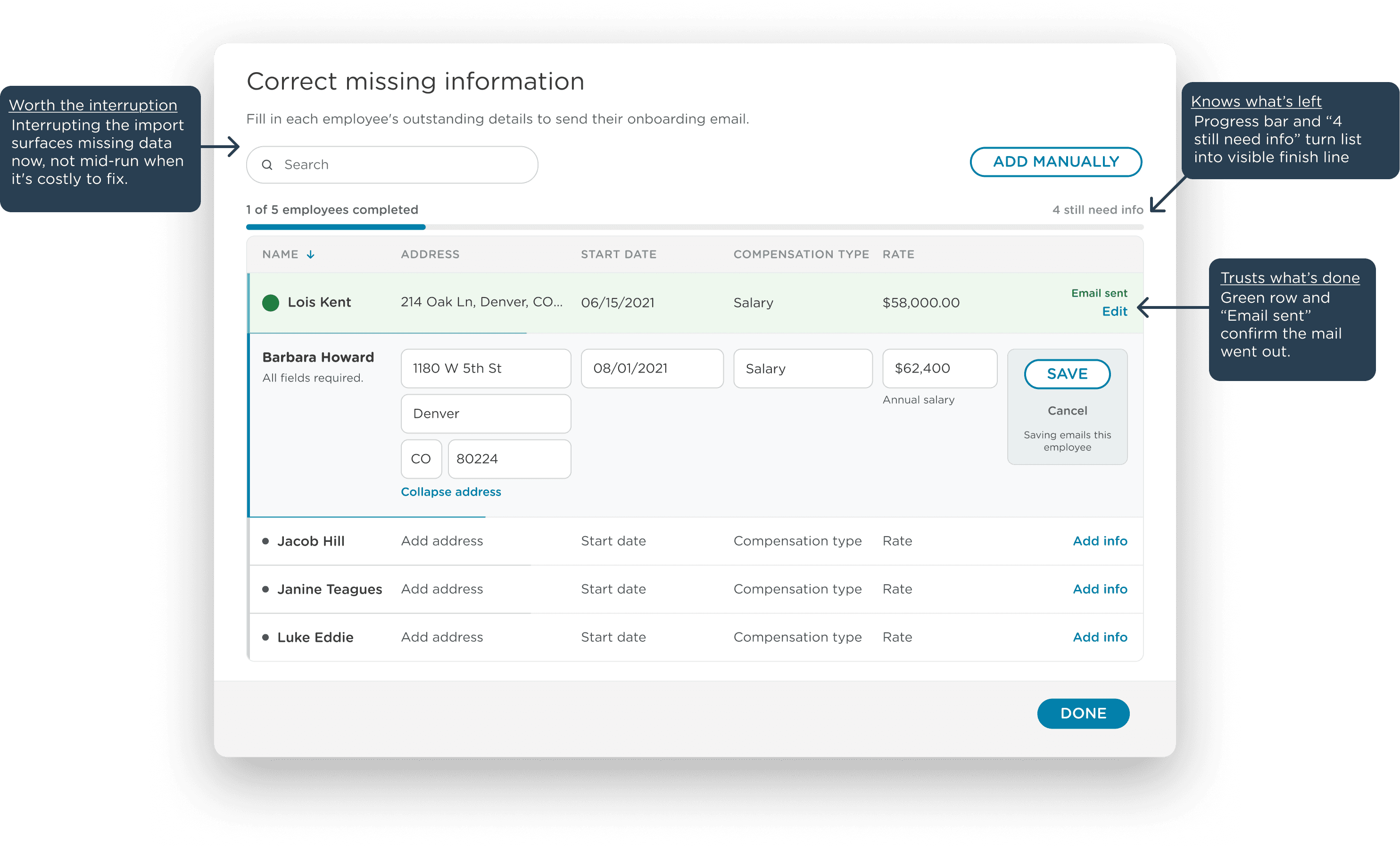
Correct missing information
Outcome
The project was designed, shelved for business and engineering prioritization, and later validated by Bain market research, which found that demand for in-product payroll wasn't where leadership had projected.
